A Night on the Beach

Ludek Kocourek in Budapest. September 2022.
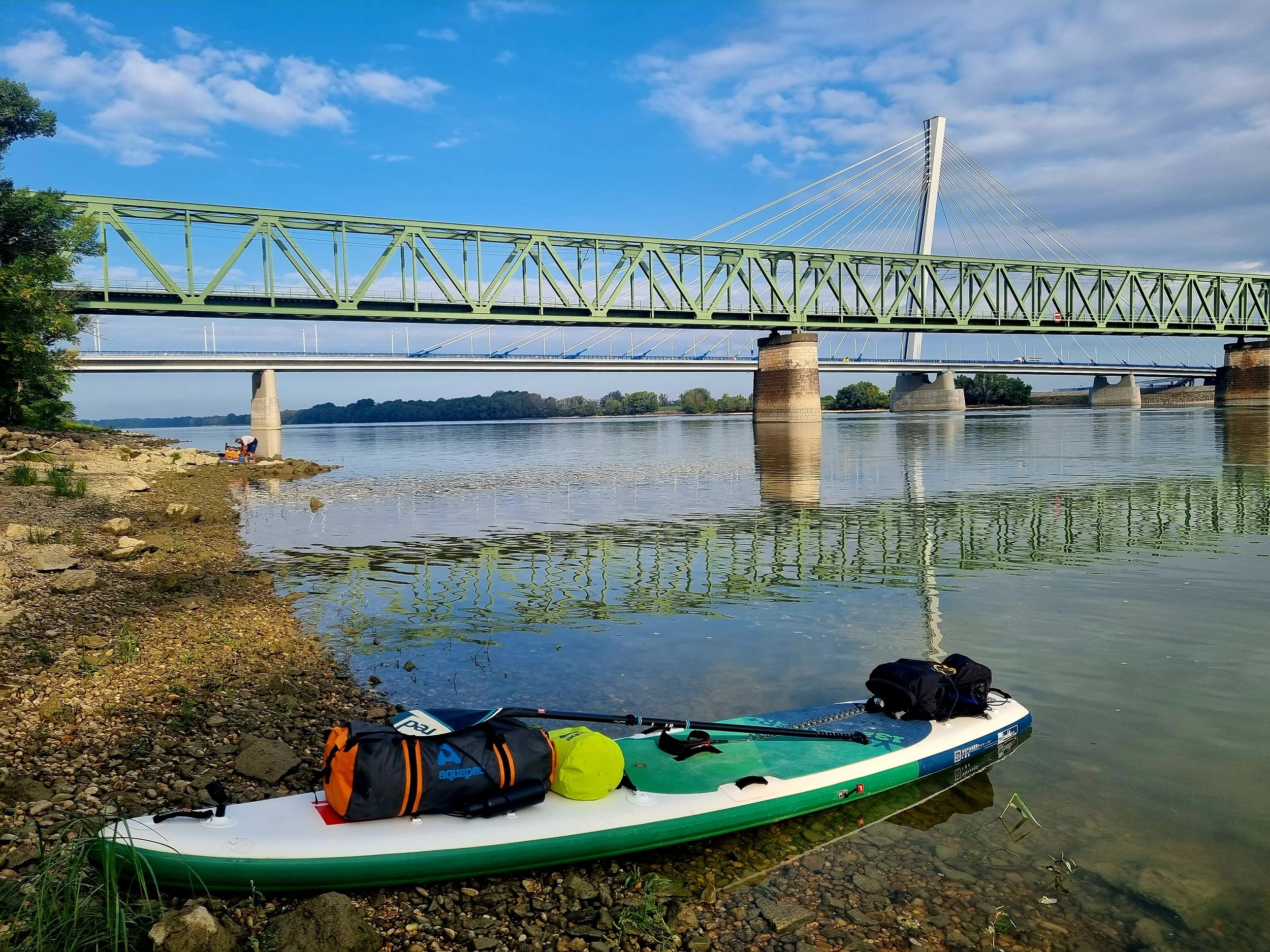
Gravel crunching under heavy boots. Two male voices. A language I didn’t understand. Was it the police? The mad axe murderer? Will I be arrested or killed? Or even worse, will I have to speak to a stranger? Can they see me beneath the trees? I froze, holding my breath, terrified to move inside my tiny tent. No other sound save for my heart pounding in my chest at a million miles an hour. An urban environment is no place for wild camping. As the voices passed and the fear subsided, I began to doze until a train passed over the railway bridge — rickety-choo, rickety-choo. Then came heavy goods vehicles on the road bridge and boats on the river all night long, the sound of water lapping on the stony river bank.
I was on a 232-kilometre, stand-up paddleboarding trip from Bratislava in Slovakia to the Hungarian capital of Budapest with a random companion, my newfound Moravian friend Ludek Kocourek. There was just one problem. Ludek spoke virtually no English, and I had no Czech. Setting off from the Slovakian capital, we had six days ahead of us on the beautiful blue Danube, communicating by telepathy and intuition alone. What could possibly go wrong?
On day two, I assumed that Ludek had a wild camping location planned. And he thought I had. So we kept on paddling and paddling and paddling, each waiting for the other to call an end to the day, until it was almost nightfall. We had no alternative but to camp on the beach in the Hungarian riverside town of Komárom. For me, paranoia is a side effect of wild camping. Exacerbated by being in a busy neighbourhood, I scarcely slept. I was exhausted the next day.
That incident apart, language wasn’t a problem. Our paddlers’ telepathy was finely tuned. We each seemed to know the mind of the other at all times because we were kindred spirits, fellow adventurers on the same epic odyssey.
We also used Google Translate.