Jorge Prazeres - Tagus River Descent
My name is Jorge Prazeres, and I mainly Stand Up Paddle (SUP) at sea on the coast of Arrábida near Setúbal, Portugal.

My team planned to descend the Tagus River from the Cedillo Dam in Spain to Vila Nova da Barquinha, a distance of around 102 km. Initially, we had scheduled our expedition to begin on April 25, 2024, lasting four days. We planned on an average of 25 km of navigation per day to complete the objective.

In our preparation, the biggest problem to solve was logistical. Because our expedition did not have a circular route, we needed to have our cars at the endpoint, but we also needed to transport all personnel and material to the starting point. It was like wanting to have our cake and eat it.
However, the week before the scheduled date, very bad weather created a huge flow in the river, leading us to postpone the expedition for two weeks. On the date of the second attempt, the weather was horribly rainy and windy. So, we decided to postpone it again, this time for the period from June 28 to July 2.
On the afternoon of June 27, we gathered the team—three men and two women—and started our journey to the Perais picnic park, where we dropped off all the gear. After setting up camp, the drivers went to Vila Nova da Barquinha (exit point) to park the vehicles. After that, they returned to Perais by taxi. The travel wasn’t expensive, and divided among all, it was completely affordable. We were ready to start the trip early the next day.
On June 28, the day dawned slightly rainy with a moderate wind in the opposite direction of our intended route.


After departure, our first stop was in Vila Velha de Ródão for some rest and a pre-prepared light meal. We continued our route, crossing the monumental Portas do Ródão, aiming to reach Fratel Dam by the end of the day. On the first day, we covered around 32 km, with the wind always against us. Our journey lasted 11 hours on the water. In short, it was a very tough first day, with no suitable alternatives to leave the water due to the wild nature of the riverbanks. The persistent headwind tired us constantly.
That evening, we set up camp close to Fratel Dam. The next morning, we received fantastic and spontaneous help to bypass the dam. Two fishermen offered support and carried all our gear to an entry point with conditions to restart the expedition at Amieira do Tejo. This very small village has a pier, and the locals provided us with good information about the river's course ahead.
We were aware that stretches of white water would appear from there on, some a little aggressive and others possible to cross by foot while holding the boards.
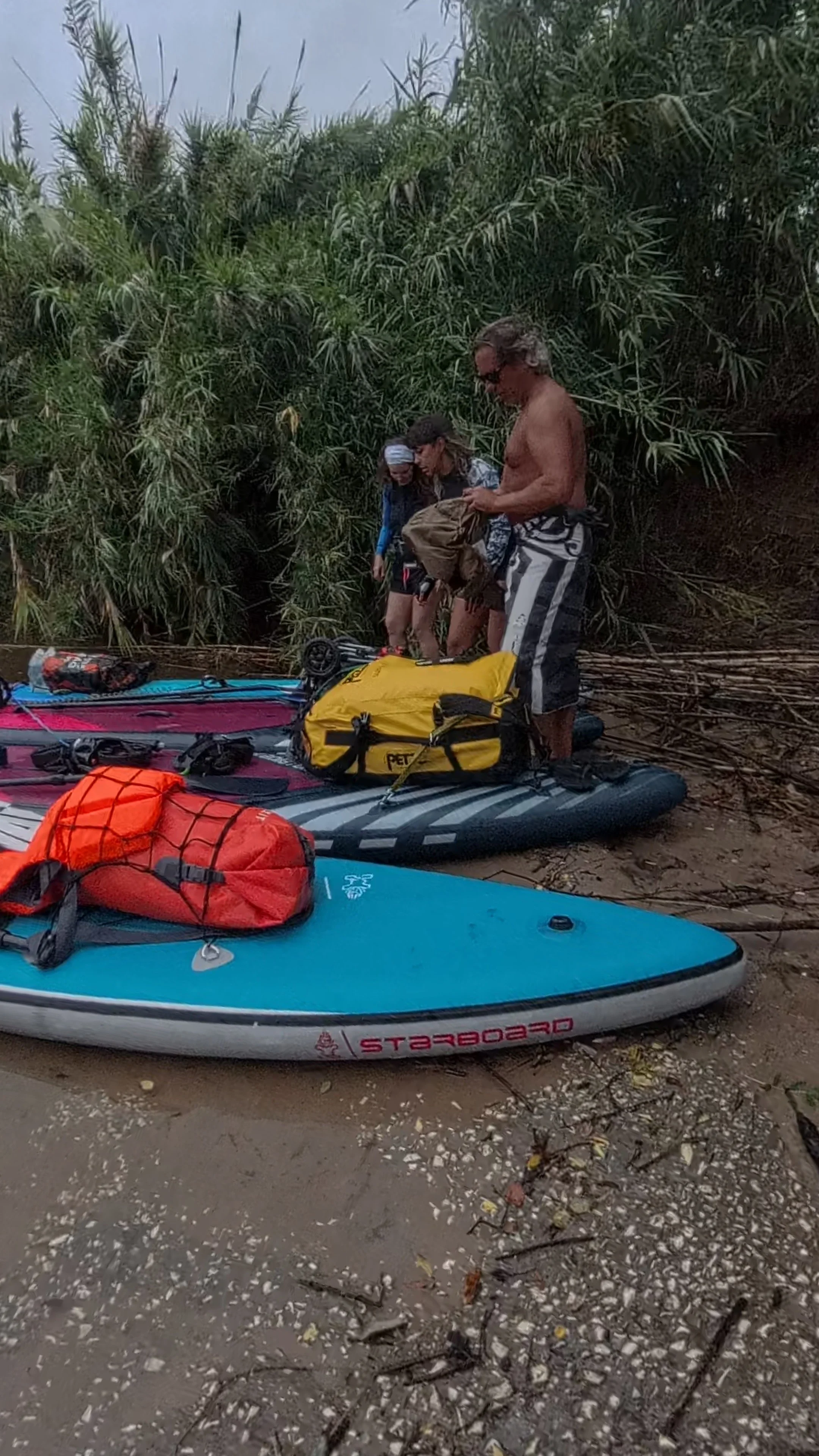
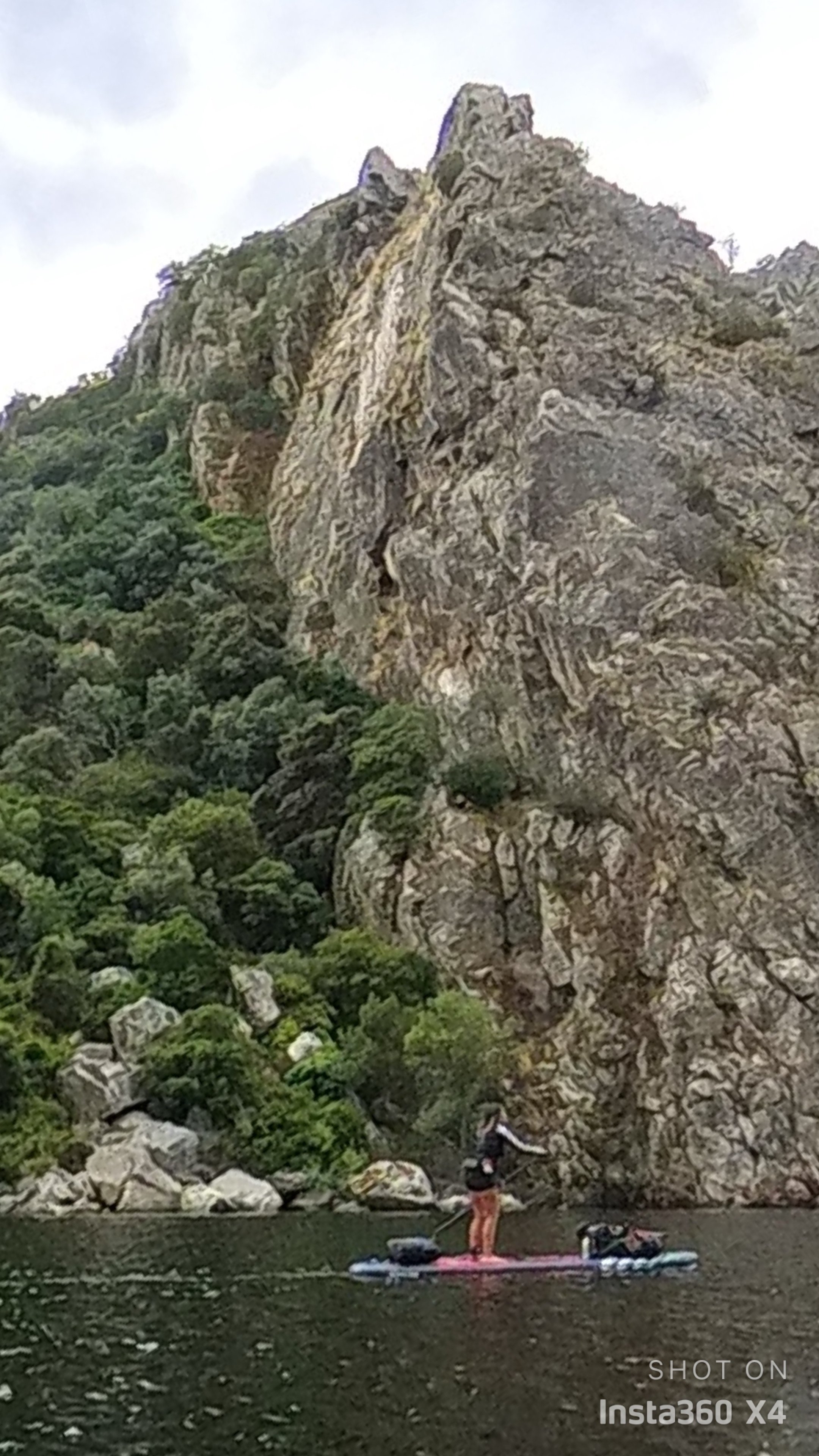

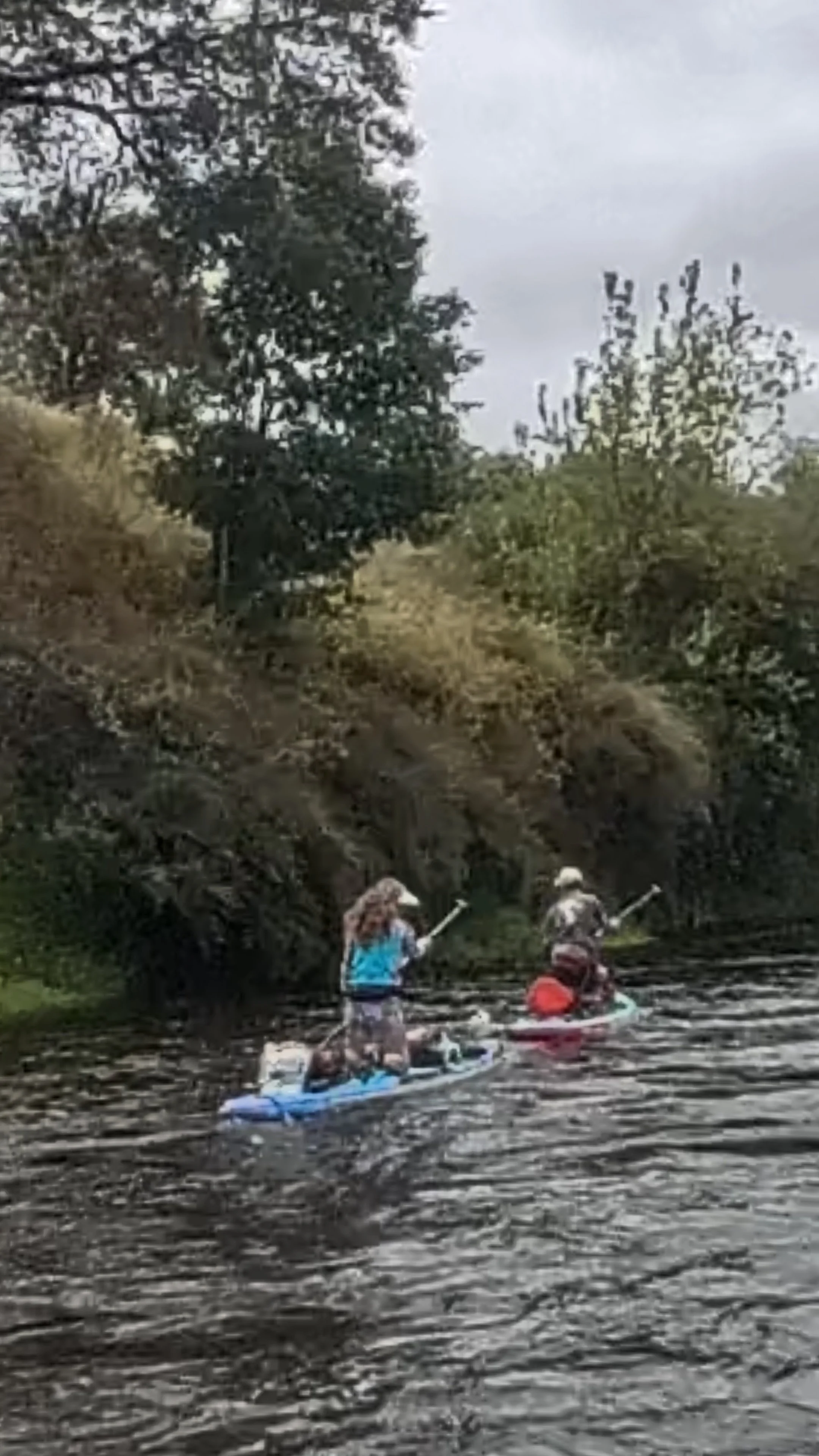
While navigating these swift waters, we broke two fins, and all the men were thrown into the water once. The women passed carefully, avoiding any damage. Despite the fast water flow, the wind still blew moderately against us.
In the late afternoon, after traveling around 19 km, we arrived at the Belver Dam, which we bypassed by crossing the village of Ortiga.
That night, we set up camp downstream of the dam. The next morning, after a frugal breakfast, we started our third day of the journey. Our goal for the day was to reach the city of Abrantes, about 25 km ahead.
From that point on, the landscape changed significantly, with the riverbanks becoming less austere and featuring some river beaches. However, the river continued to flow very fast and was very shallow.
Just in front of the city of Abrantes, we bypassed an inflatable dike that creates a small lake in front of the city's leisure area and set up our camp. It was another tiring day, as the wind continued to blow with moderate intensity without giving us any respite. Since the first day, the wind had been our constant companion, as if it didn't want us to reach the end of the trip.
That night, around 3:20 am, I was woken up by the loud sound of water rushing just below my tent. The dam gate had been opened, and the river flow rose by approximately 1.5 meters. The water was just over two feet from our tents. I remained alert until about 5 am, noting that the river flow had stabilized and was starting to decrease.


Incredibly, this was the best thing that could have happened to us. We had enough flow to reach our final destination, Vila Nova da Barquinha, without needing to transport all our gear overland or navigate with the fins of our boards dragging on the river bottom. Considering our tired state on the fourth day, the gods were benevolent, giving us the speed of the water in our favor and calming the wind.
We made a stop in Constância, where the Zêzere River joins the Tagus River, to have coffee and regain our strength.
Then, back on the river, we passed by Almourol Castle and arrived in Vila Nova da Barquinha around lunchtime, having completed the last 26 km without any further incidents.


It was a very exciting four-day expedition, despite many unpredictable factors, even with the most careful planning. In the end, we were all very happy to have successfully completed this challenging expedition.
If you plan to go on a Stand Up Paddle expedition, always consider bringing a life jacket (not just a buoyancy support device), a quick-release leash, and some spare fins. Lastly, remember that Google Maps or similar tools never tell the whole story. There's nothing like knowing the place beforehand, if possible.
